How much does a beach cleaner cost?
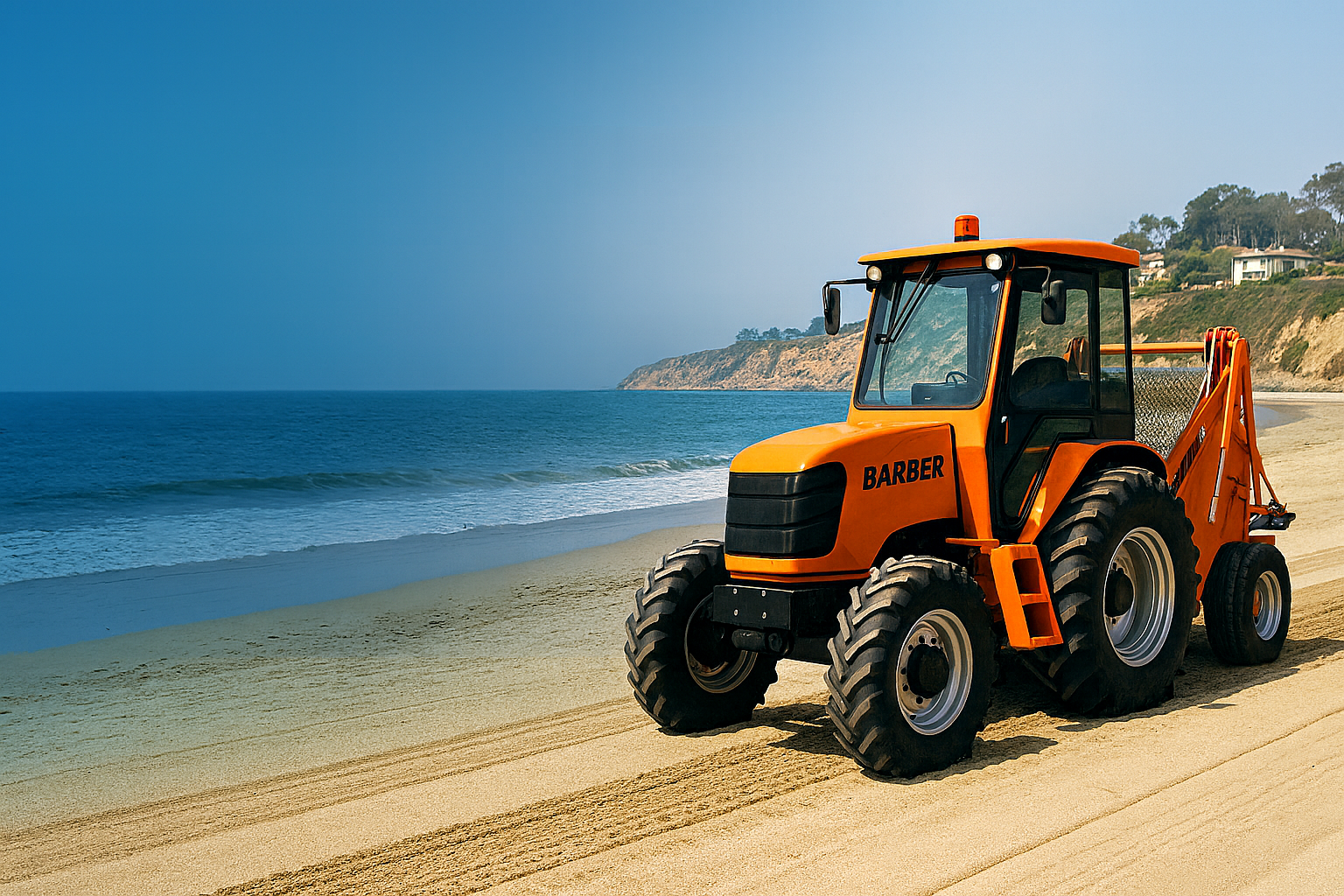
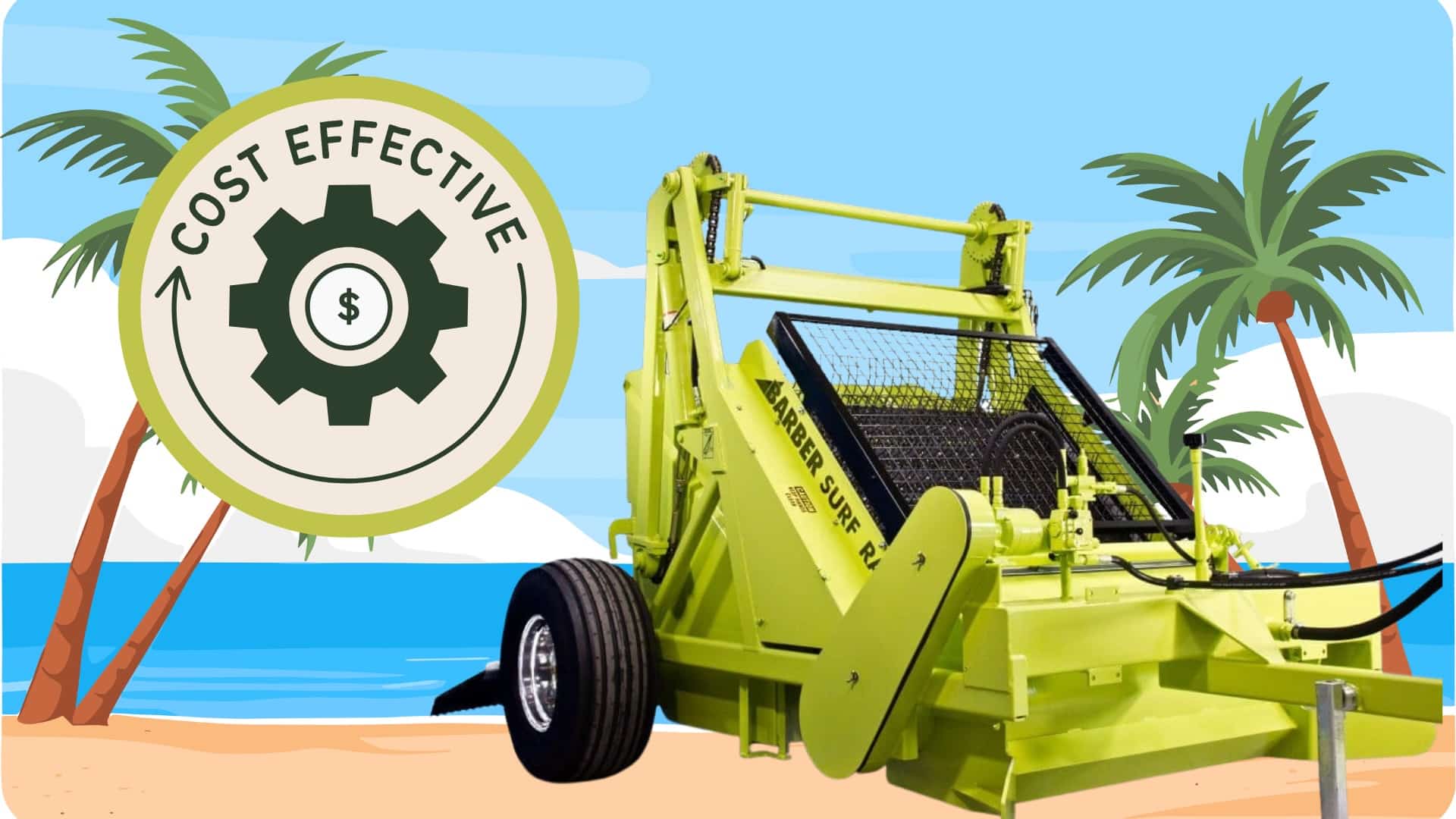
A dedicated beach cleaning machine generally costs from around $12,000 for an entry-level compact walk-behind model to well over $100,000 for a large tractor-towed system, depending on its size and cleaning throughput capability. But the actual cost of a beach cleaning machine includes more beyond the intitial sticker price and should also be compared agains the price of not having a machine. Below, we break down what drives the cost and the return.
Beach cleaner cost ranges by machine type
| Machine Type | Typical Price Range (USD) | Best For | Key Advantages |
|---|---|---|---|
| Walk-behind beach cleaner | $10,000–$25,000 | Small private beaches, coves, short shorelines, dry sand | Lowest cost; no tractor needed; simple to operate |
| Small tractor-attachment sifter | $20,000–$30,000 (machine only) |
Small–medium beaches with mostly dry sand and small debris | Affordable upgrade; works with a compact tractor |
| Mid-range tractor-towed raking and sifting machines | $30,000–$65,000 | Municipal beaches with consistent debris | Good throughput; effective on a wide range of debris; economical |
| Premium tractor-towed beach cleaner | $65,000–$100,000+ | 1–5+ mile beaches; mixed conditions; shells; seaweed, regular cleaning | High speed and capacity for daily cleaning of highly-trafficked beaches. |
| Maximum Capacity Beach Cleaners | $100,000–$150,000+ | Major coastal cities; heavy seaweed; storm debris | Max durability; highest output; cleans 7–9 acres/hr |
Hidden Beach Cleaner Costs (Read Before You Budget)
The sticker price only tells part of the story.
Just like buying a home, owning a beach cleaner includes several secondary costs that can influence your actual investment.
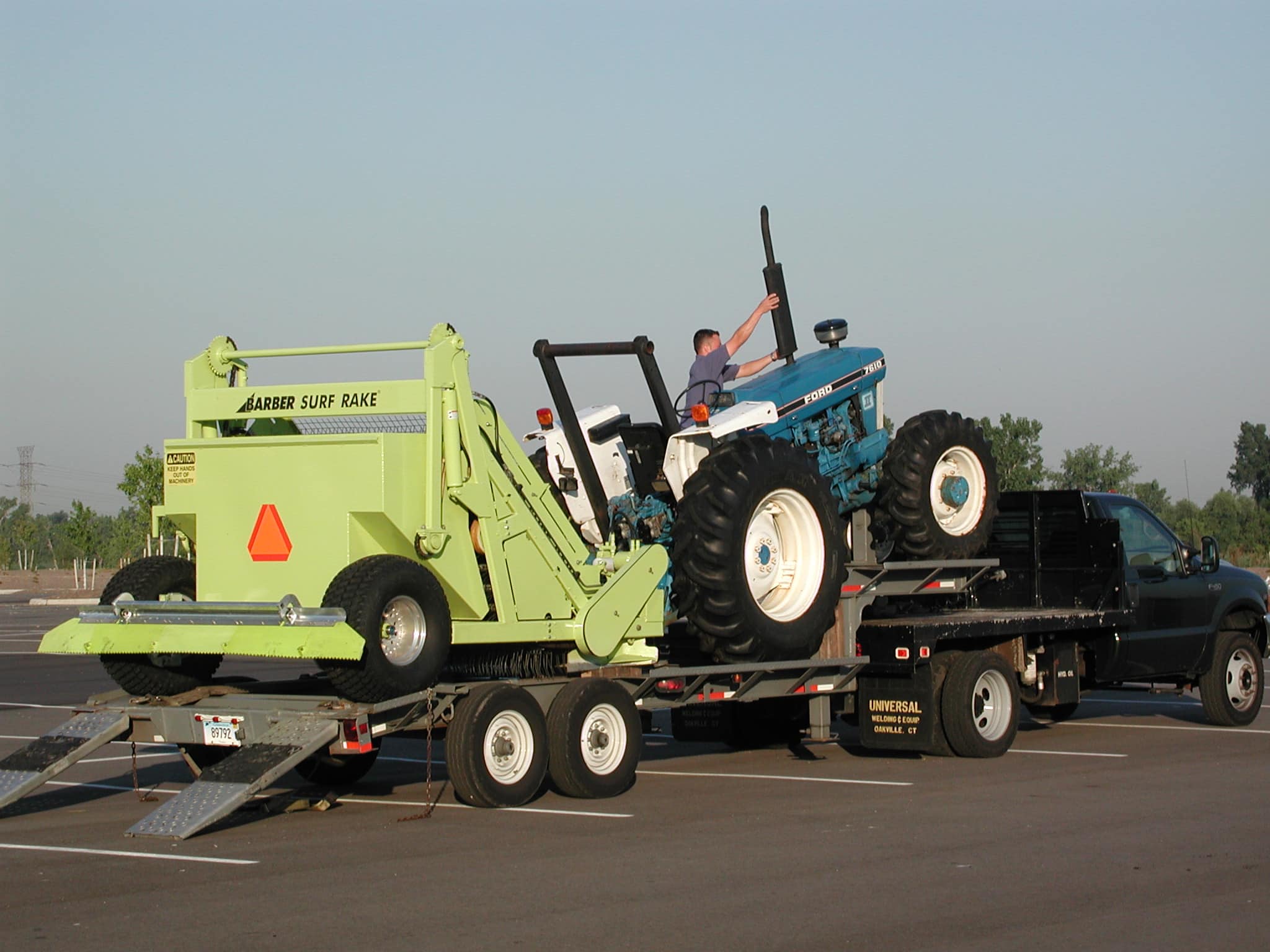
1. Shipping, Taxes & Import Fees
These vary by location, port, and dealer, but they’re part of nearly every purchase.
If you’re budgeting for a municipal bid, include this line item early — it often surprises buyers.
The specific fees can vary drastically by the beach’s proximity to the manufacturer, so reach out to the specific beach cleaner manufacturer you’re considering for specific estimates.
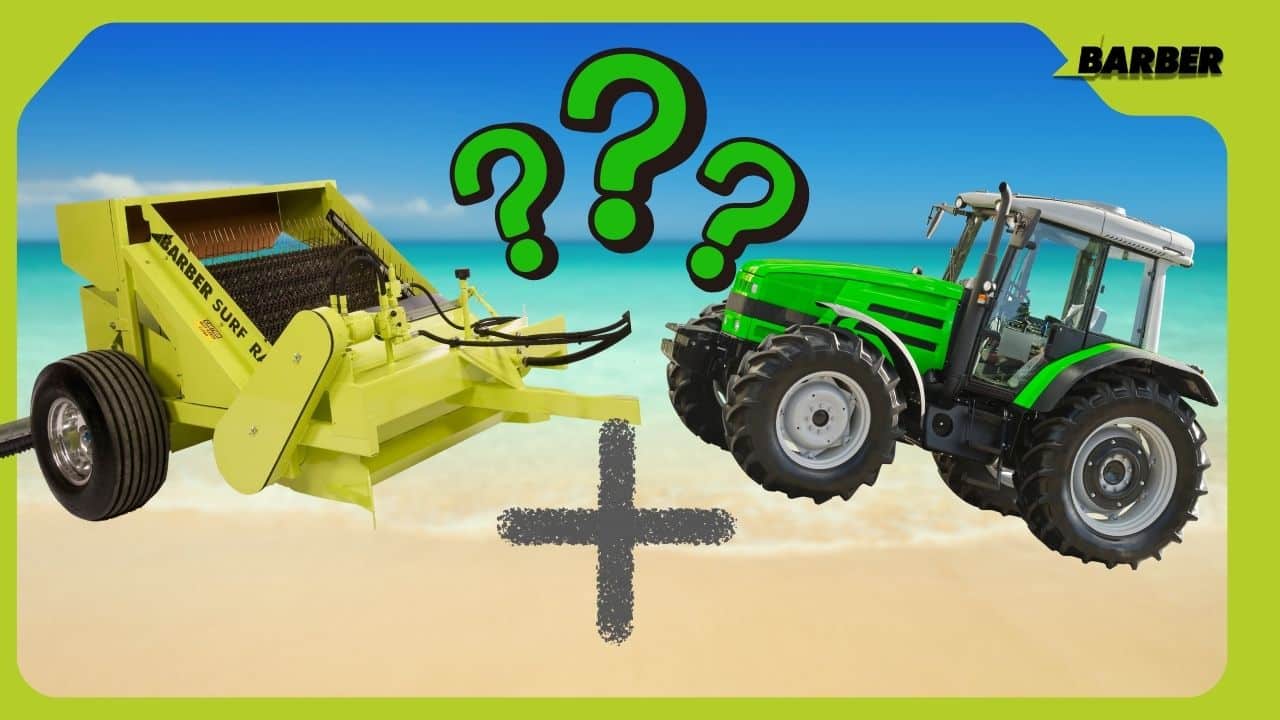
2. Tractor Requirements (If Applicable)
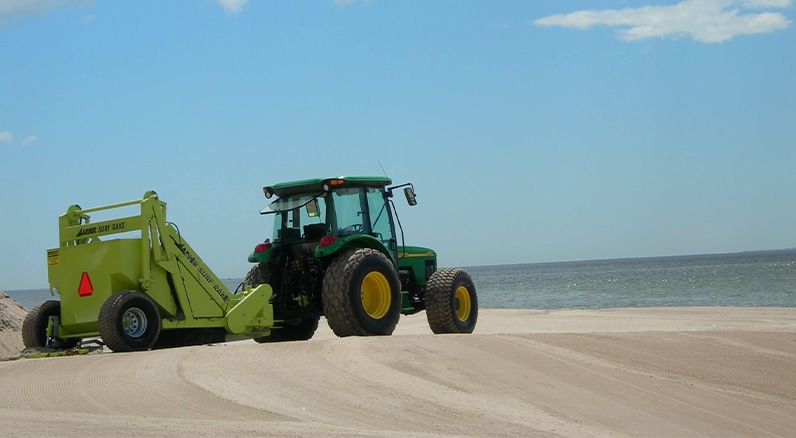
Most beach cleaning machines are tractor-towed, which means:
- If you already have a compatible tractor → great
- If not → the tractor becomes part of your total cost
A key insight:
Some self-powered or self-propelled units cost more than a premium towed machine and a tractor combined.
This is why it’s important to compare total system cost — not just machine cost.
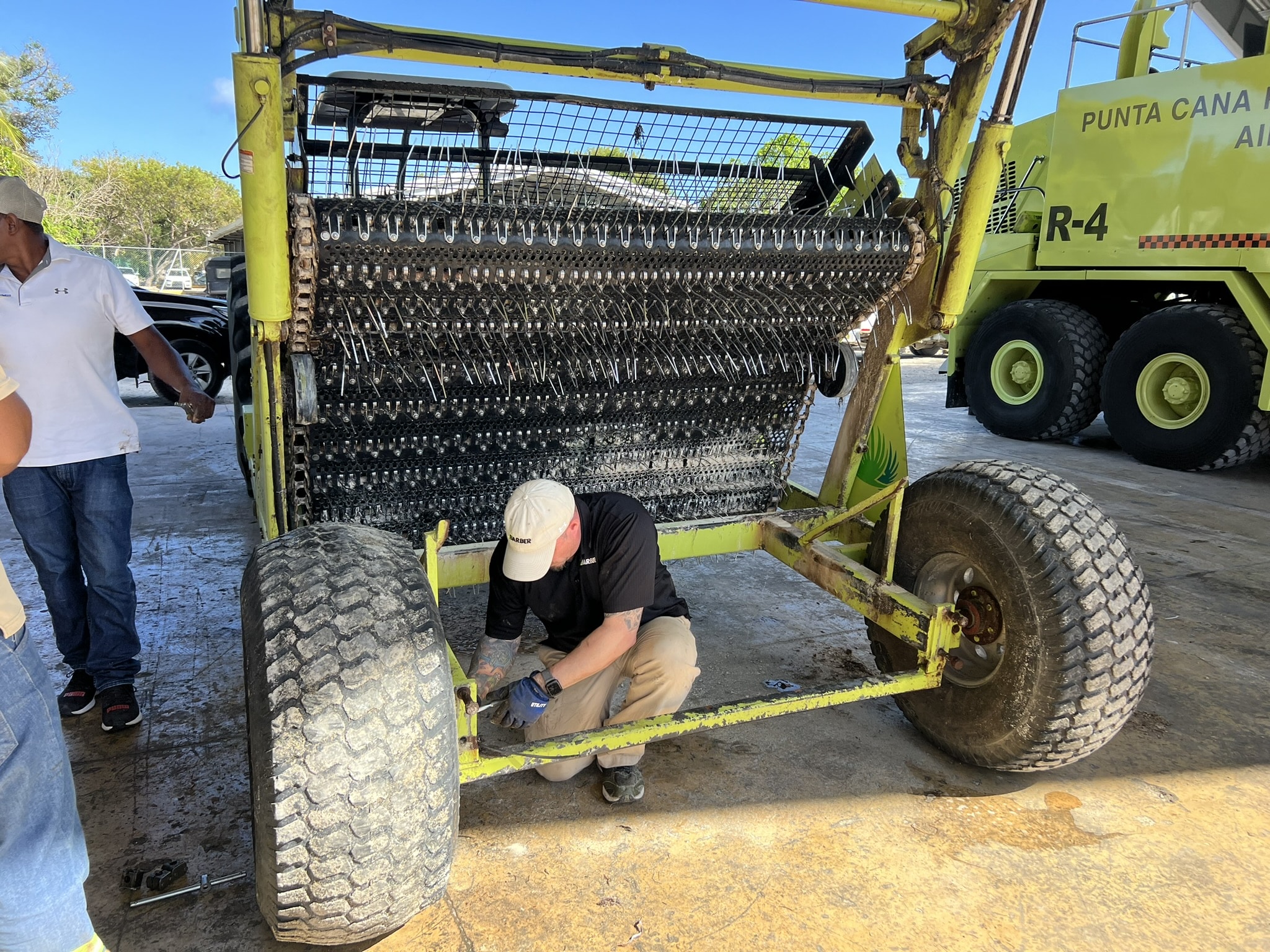
3. Ongoing Maintenance & Operation
Every machine—regardless of brand—requires standard upkeep:
- Wear parts (belts, screens, tines, bearings, chains)
- Occasional repairs
- Labor for a trained operator
- Greasing & routine adjustment
A machine that’s inexpensive upfront but costly to maintain may be more expensive over its lifetime.
Pro tip: Machines that work in sand + saltwater should be evaluated on total cost of ownership (TCO), not just purchase price.
Why Can’t I Find Beach Cleaner Prices Online?
If you’ve searched for “beach cleaner price,” you’ve likely noticed that most manufacturers don’t publish exact prices.
It’s not a sales tactic — there are simply too many variables.
Beach cleaner cost depends on:
- Model type & cleaning method (sifter vs. rake)
- Cleaning width & hopper capacity
- Dump mechanisms
- Tractor requirements
- Customizations & options
- Regional dealer fees
- Raw-material & supply-chain changes
- Tariffs, taxes, and import/export variables
- Municipal bid requirements
In short: there is no single flat price tag for any industrial-grade beach cleaner.
Understanding which factors matter for your beach program helps you avoid overbuying — and avoid paying for capabilities you don’t need.
👉 For a deeper breakdown of these variables, read our guide:
What Impacts Beach Cleaner Prices?
What Is the Cost of NOT Buying a Beach Cleaner?
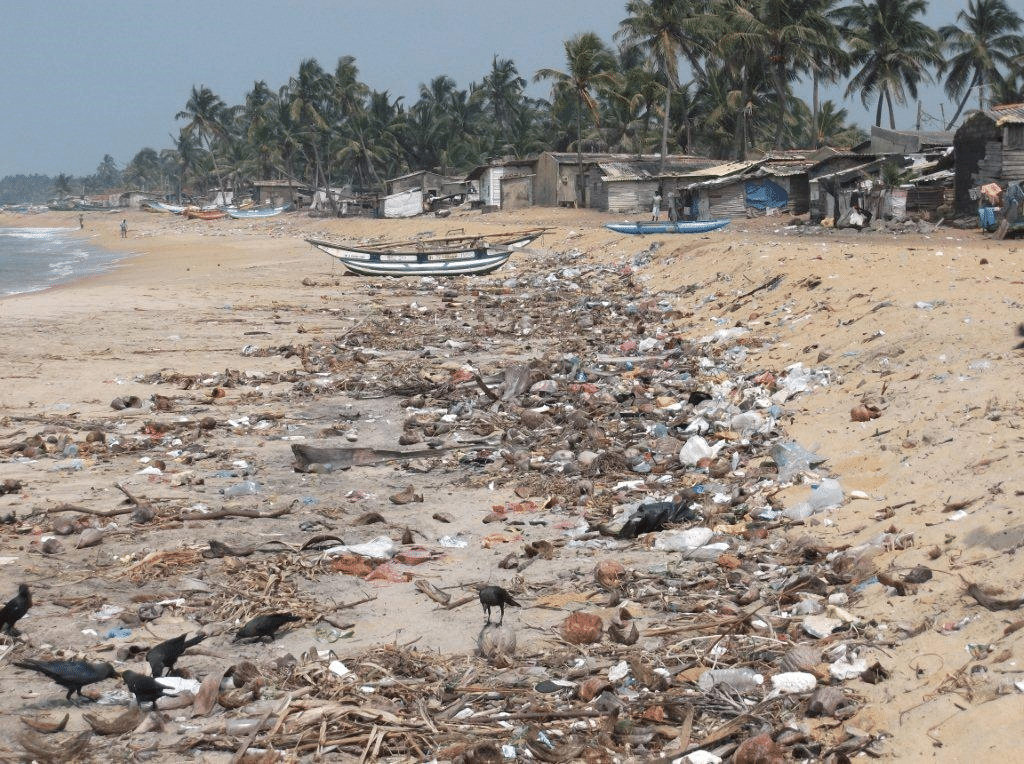
Despite the potential costs of owning a beach cleaner, if you’re maintaining your beach manually, you may already be paying for one — just in a less efficient way.
Without a machine, you’re paying for:
- High labor costs
- Slow cleanup cycles
- Staff time diverted from more valuable work
- Inconsistent results (especially after events, storms, or heavy seaweed days)
Dirty beaches also create hidden revenue losses:
- Negative guest experiences
- Lower return visits
- Bad reviews and complaints
- Higher long-term cleanup costs after buildup or compaction
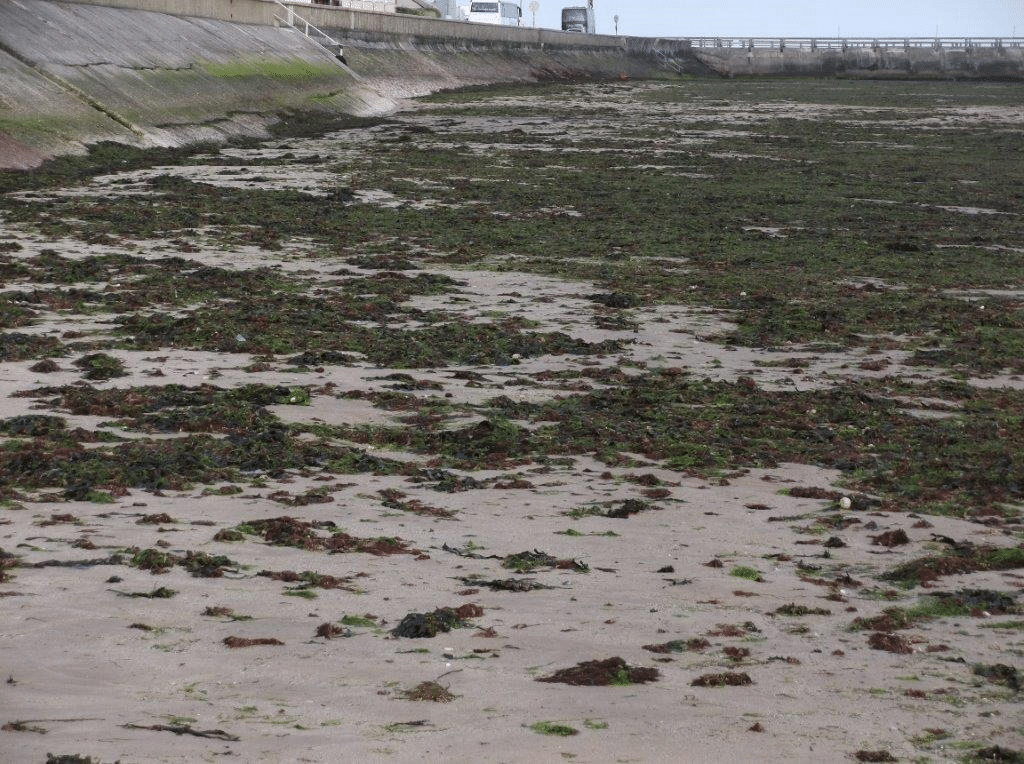
On the flip side: a clean beach increases loyalty, safety, and guest satisfaction — and reduces your overall operating burden.
Not Sure What Beach Cleaner You Need? We Can Help.
Every beach is different. So is every budget.
Our team can walk you through:
- Whether a machine makes sense for your actual use case
- Which model fits your beach conditions and staffing
- Total ownership cost (machine + tractor + maintenance)
- How much you might save or earn back with a consistent cleaning program
📧 Contact us here or call us — you’ll talk to a real person, not a bot.
Not ready to talk yet?
Browse more beach cleaner resources here.
Frequently Asked Questions
Walk-behind models range from $10,000–$20,000; small tractor-attachment sifters $20,000–$30,000 (machine only); mid-range tractor-towed machines $30,000–$65,000; premium tractor-towed cleaners $65,000–$100,000+; and maximum-capacity industrial machines $100,000–$150,000+. Final pricing depends on model, options, and shipping and import fees.
Manual beach cleaning incurs recurring labor costs, slow cleanup cycles, inconsistent results, and staff time diverted from higher-value work. If manual teams struggle to keep up with debris, hidden revenue losses can occur: negative guest experiences, lower return visits, bad reviews, and higher long-term cleanup costs from debris compaction and buildup.
Municipal buyers should include machine price, shipping and taxes, tractor cost if applicable as budget line items. A good manufacturer will have a warranty that covers any potential parts or wear in the first year.
Payback depends on what you currently spend on manual crews, emergency contractors, and bookings lost to a poorly kept beach. Operators replacing large manual cleanups often recover the investment within a few seasons through lower labor and more consistent results. We can model your existing cleaning spend against machine ownership to estimate a realistic payback window for your operation.
Lead with numbers leadership already tracks. Tie beach condition to guest reviews, ratings, and return visits, then present the machine as a fixed cost that replaces variable, unpredictable manual spending. We help buyers assemble a simple case comparing current cleaning costs and revenue risk against the machine’s price, so the beach reads as a measurable line item rather than overhead.
It can be, if the machine comes from a reputable manufacturer and its high-wear components have been refreshed. A quality refurbished unit costs less upfront while offering maintenance costs similar to new, because the common wear parts are replaced during reconditioning. We refurbish machines at our factory and can advise whether new or used better fits your budget and conditions.