- +1 203 729 9000
- hbarber@hbarber.com
- Mon - Fri: 9:00 - 18:00 EST

Home / Beach Cleaning Machines / Surf Rake / Applications / Rock & Shell
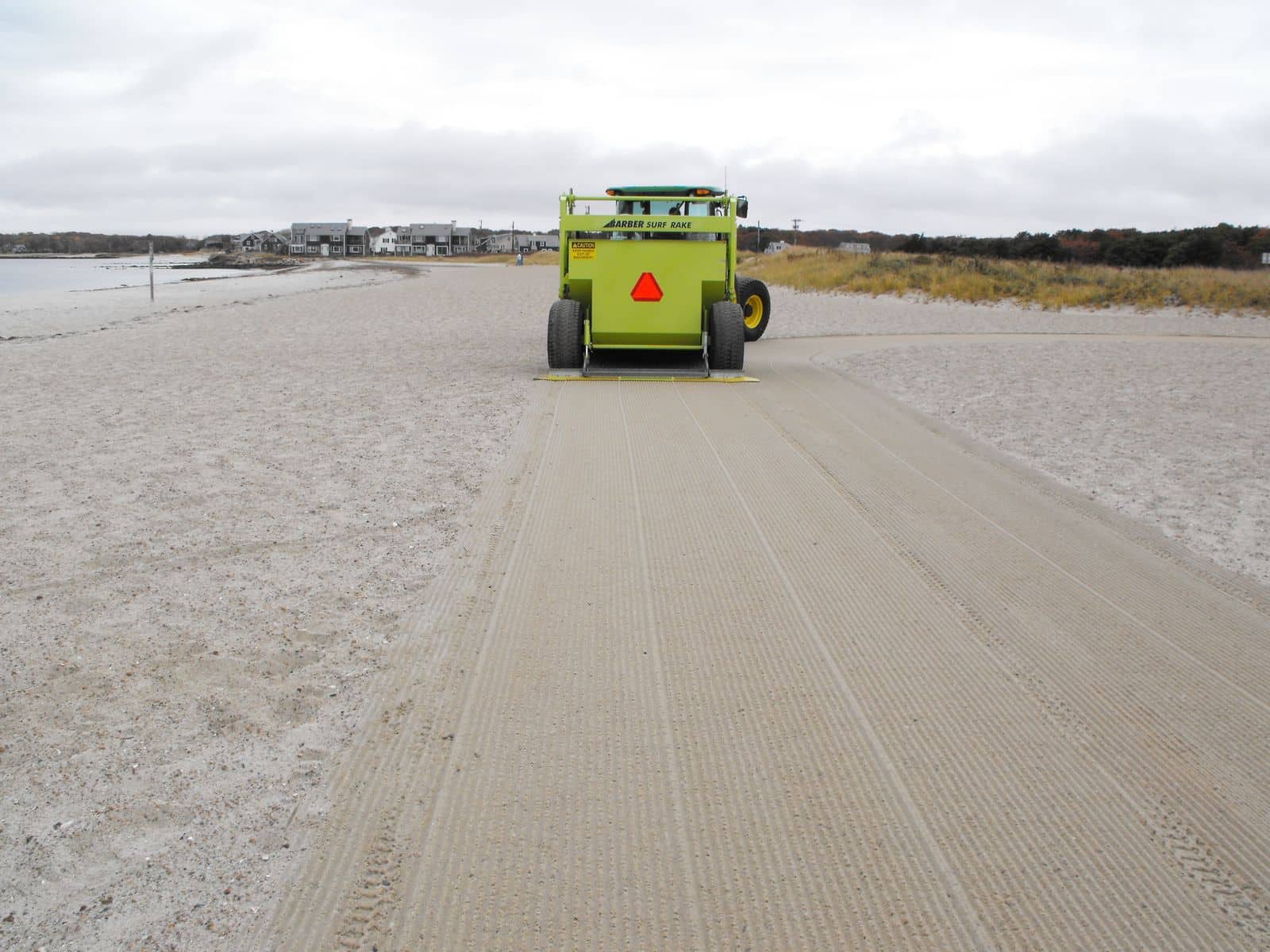
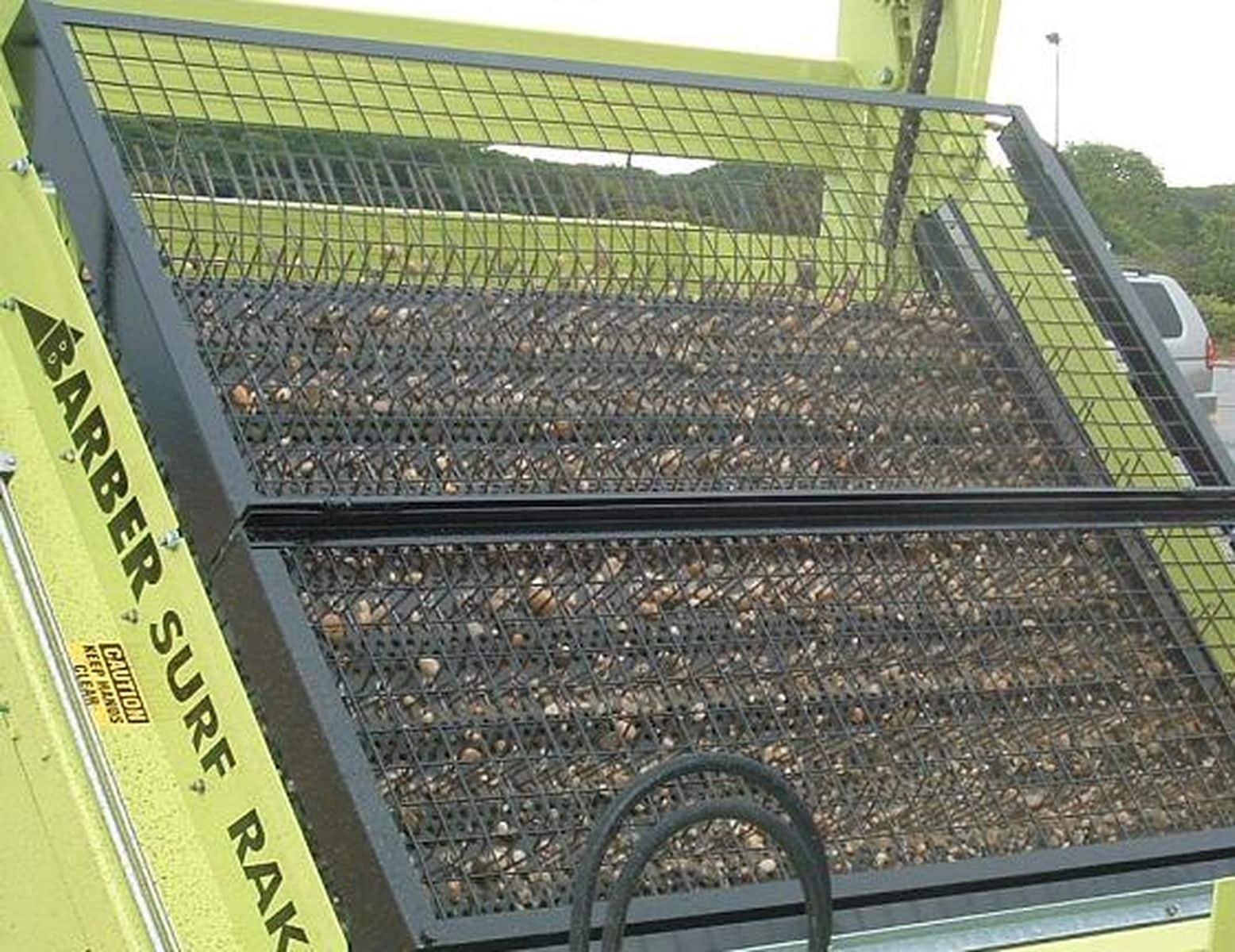
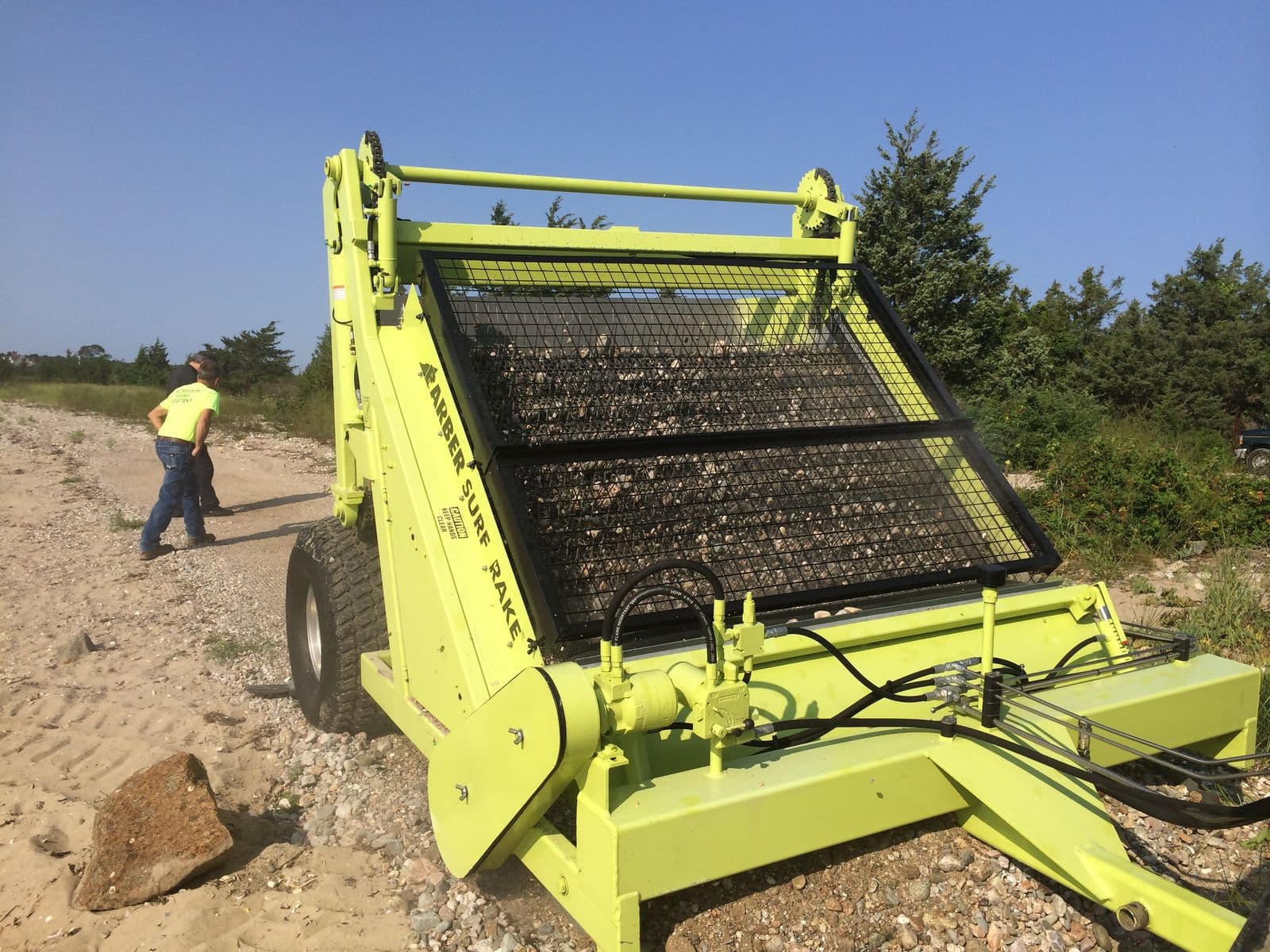
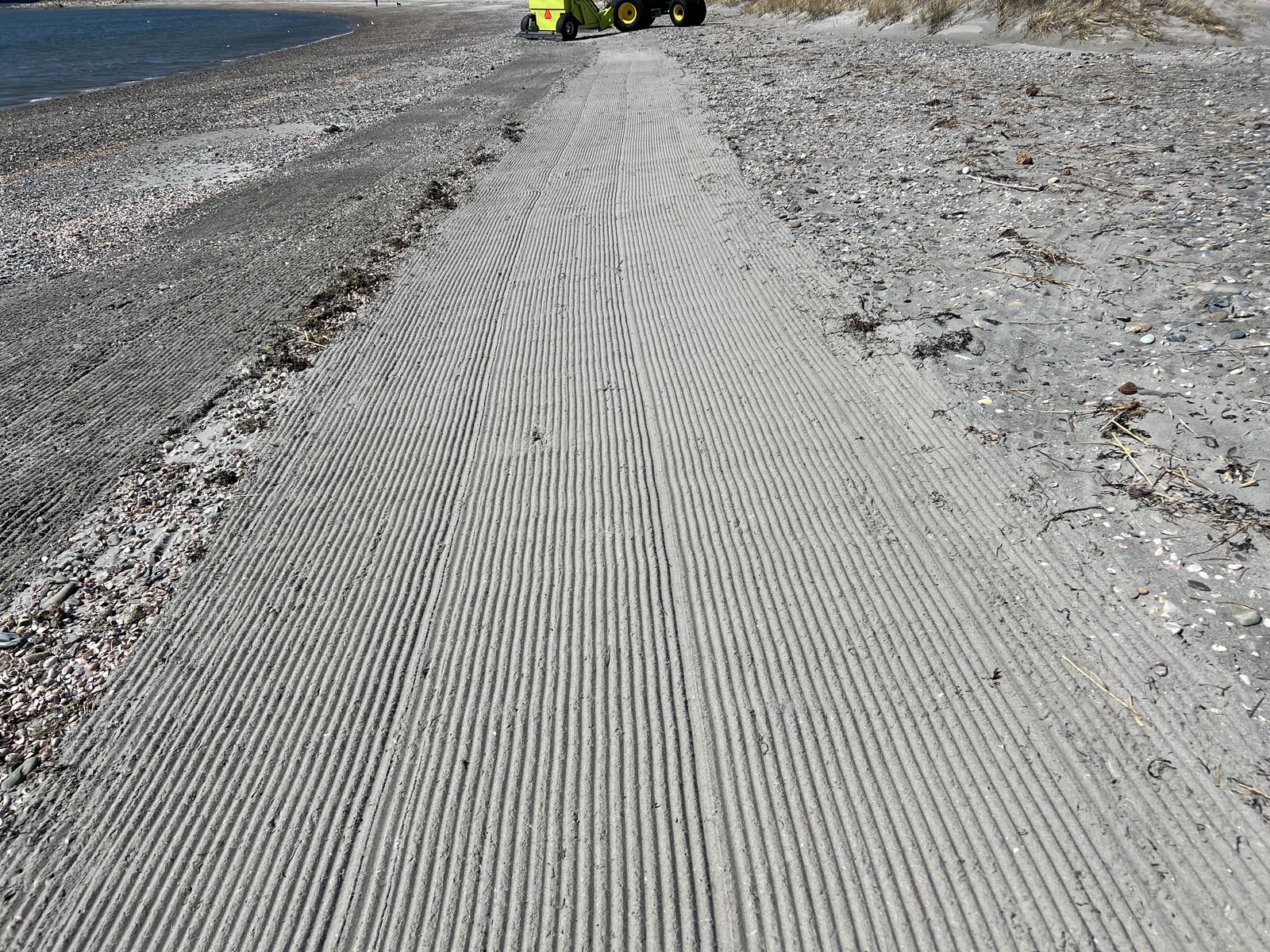
The SURF RAKE is a beach stone removal machine that rakes stones and rocks — from pebbles to softball-sized — out of the sand using the same tine-and-conveyor system as Barber’s Turf Rake. One tractor-towed pass lifts the rock onto the conveyor and leaves a clean, groomed finish, so you can stay on top of stones that keep resurfacing after storms or tides.
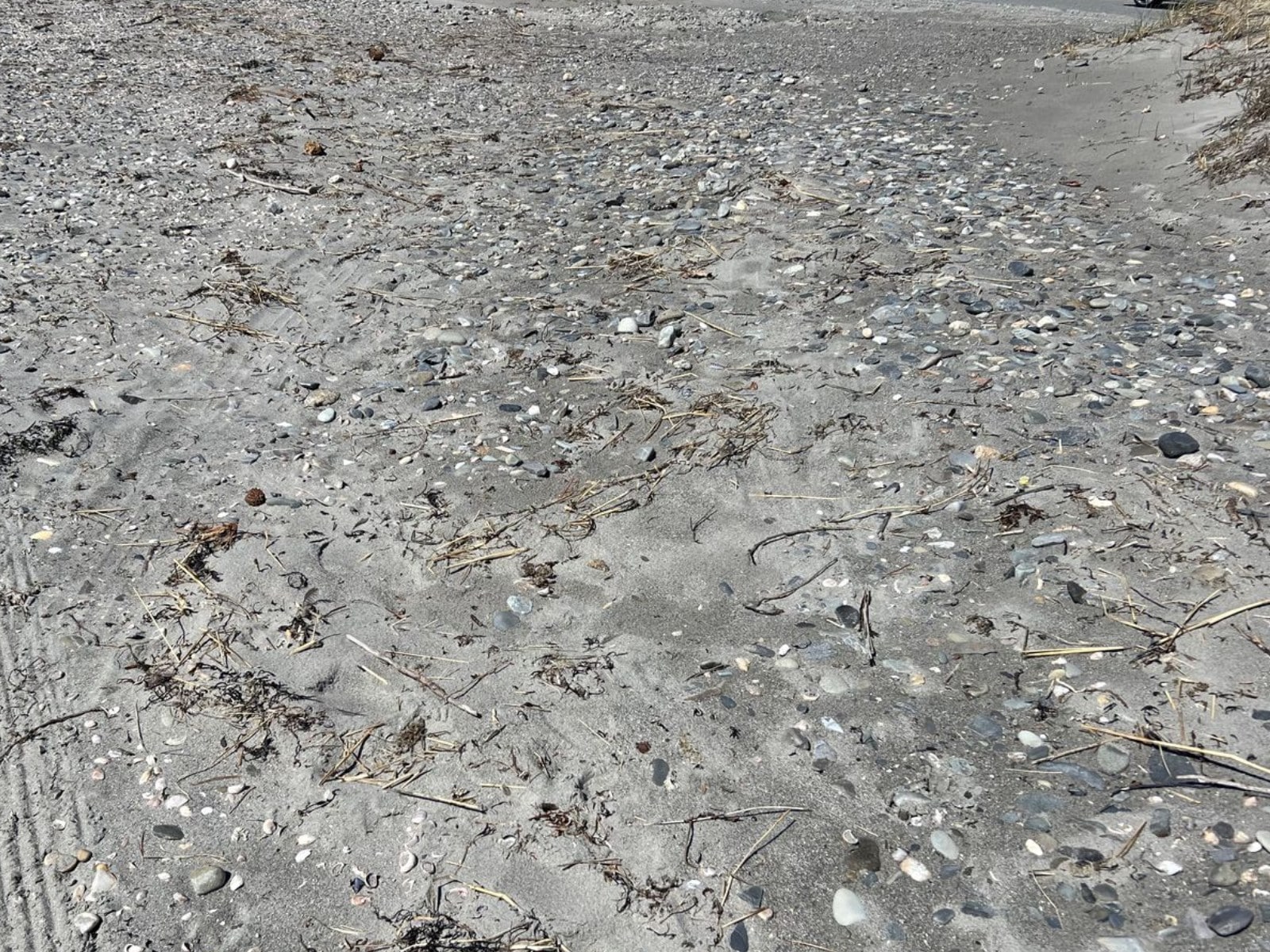
A client’s beach in Michigan underwent sand replenishment, where sand was pumped from a nearby channel to deepen it for boats. The sand and sediment from the channel was deposited on the beach as ‘new sand’ to expand the beach and combat errosion. Unfortunately, it brought with it tons of rocks that rose up through the sand every day, in addition to other organic debris.
This parks department brought in the SURF RAKE to regularly remove stones and rocks that would surface on the beach sand almost daily, so that the beach retained its reputation and visitor numbers throughout the season.
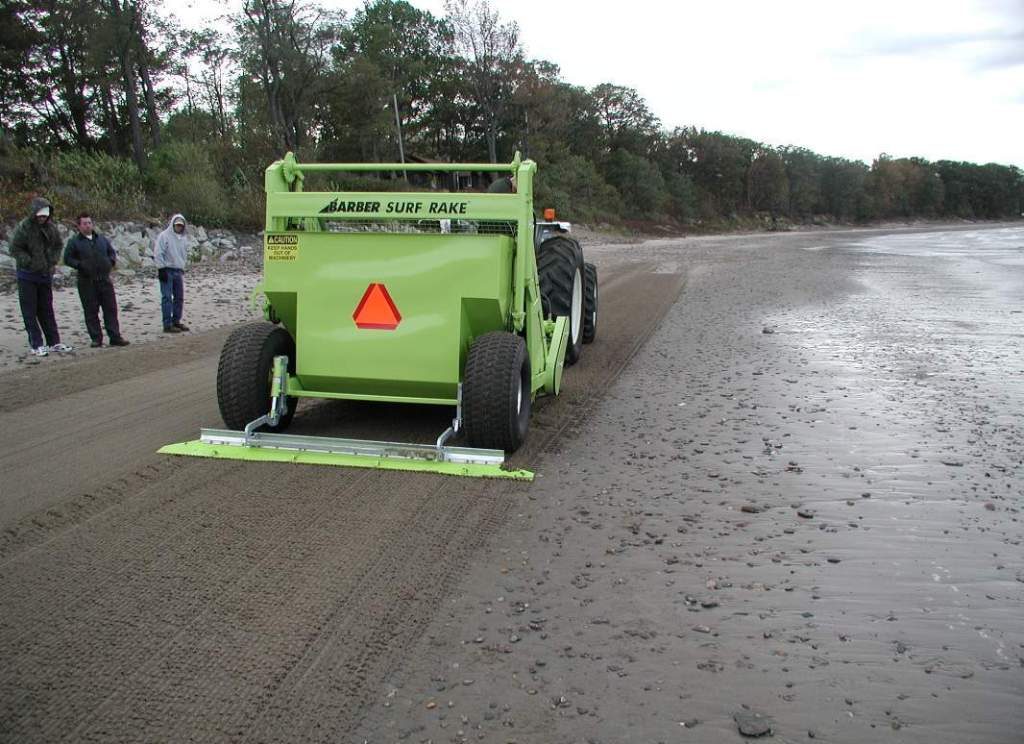
Handles heavy amounts of stone and rock that are impossible for manual crews to remove and can't be separated by conventional industrial equipment.
Tine-raking action lifts the stones and rock without removing the sand, so that the beach profile stays intact season over season.
Restore beaches to inviting standards each season, regardless of beach replenishment practices.
Tractor-towed and hydraulic-powered, using tough, proven steel and components that stand up to the weight and impact of stony beaches.
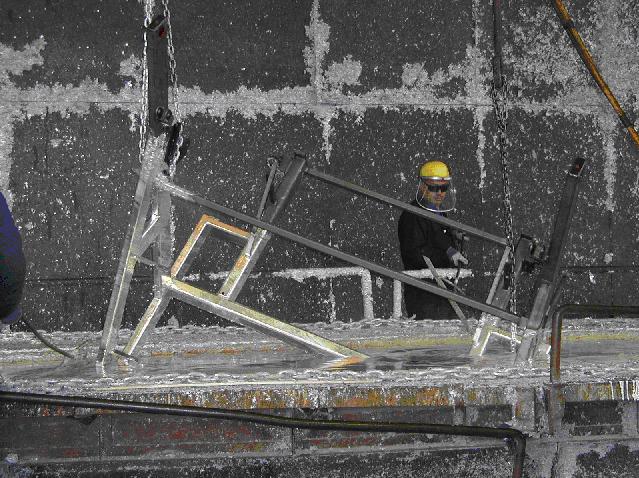
Unlike many other stone and rock removal solutions, the SURF RAKE is built from the ground up to resist corrosion and abuse despite sand, salt water, and constant contact with stones and rocks, so you never have to worry about the machine going down during peak season.
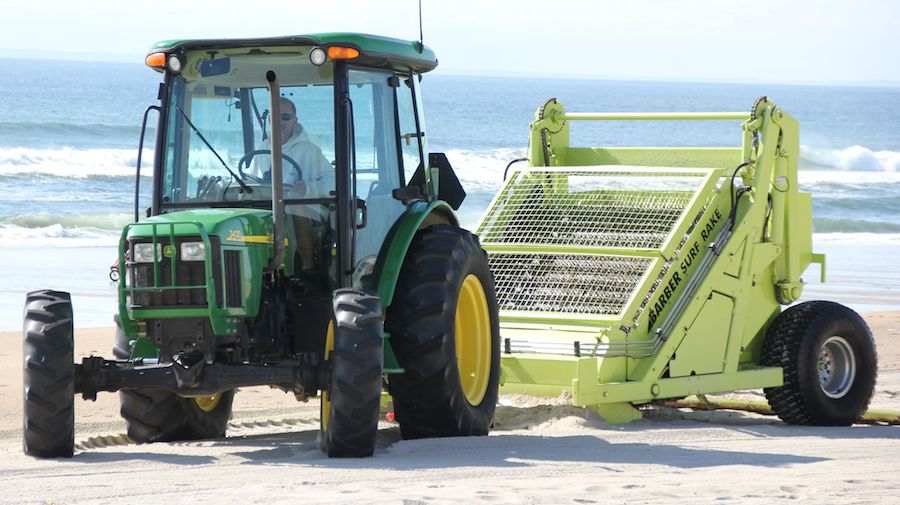
Anyone who can drive a tractor can operate the SURF RAKE. Simply turn on the tractor’s PTO shaft and control the cleaning depth using the draft control in the tractor. We have a full library of training videos to help any new staff get up to speed in minutes.
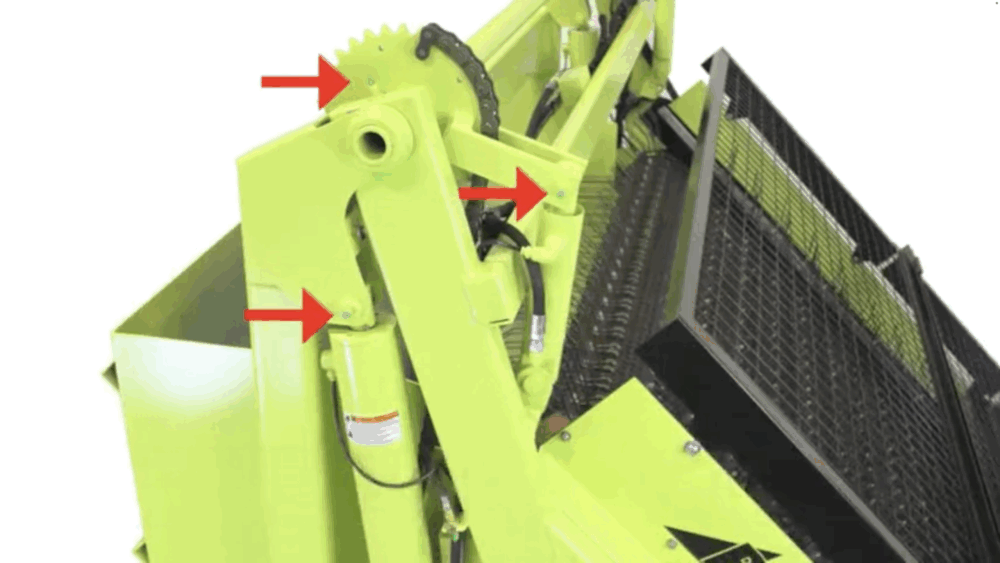
The SURF RAKE was designed to be incredibly simple to maintain. View our maintenance video library to review its simple maintenance procedures.
| Method | Speed | Sand Loss | Effective on Stone and Rock | Labor Required |
|---|---|---|---|---|
| Manual crew raking | Slow | Low | Ineffective — not a viable solution | High |
| Screen Sifting Beach Cleaner | Moderate | Low in dry sand, higher in wet-sand/tidelline conditions | Strong in optimal conditions | Low |
| SURF RAKE (tine-raking) | Fast | Minimal | Strong — built for regular stone removal | Low |
Manual removal isn’t viable at any real volume — stone is heavy, and it keeps resurfacing. Properties with stony sand use a mechanical beach rake or stone picker: a hard clean-down pass at the start of the season to reset the beach, then regular maintenance passes as new stone works its way up through the sand.
Sifting machines can do well on stone in dry, loose sand. But stone-heavy beaches are usually compacted and often damp, which is exactly where sifting slows down and starts pulling sand into the hopper. Tine raking lifts stone off and out of the sand without excavating and discarding sand along with it — and it’s built to take the impact and abrasion of running rock through the machine day after day.
For stone, machines are the only practical method at volume — a hand crew simply cannot move that weight over acres of beach. Manual labor is useful for the occasional boulder or oversized debris the machine can’t remove, not for the stone removal itself.
If guests are complaining about walking barefoot, or you’re re-cleaning the same stretch after every storm, you’re already at machine volume. Beach restoration and replenishment projects are the biggest driver — sand pumped in from offshore carries stone that keeps rising to the surface all season long, so those beaches almost always need ongoing mechanical stone removal.
Often, yes — one unit can serve several properties or municipal beaches on a rotating schedule. Pairing the machine with a truck to haul stone off the beach while the machine keeps cleaning is what determines how much ground you cover in a shift.
The heaviest work is at the start of the season — a full clean-down pass to reset the beach after winter storms. After that, most properties run maintenance passes on a regular interval throughout the season, because tide, wind, and foot traffic keep bringing new stone up through the sand profile. Nourishment years require noticeably more frequent passes.
Removal depth is adjustable on some beach cleaning machines, like the SURF RAKE, and many properties successfully coordinate machine use with local wildlife guidelines during nesting season — worth a conversation with our team and your local conservation authority before peak season starts.
The hopper dumps hydraulically into a truck or onto a designated stockpile. Many properties reuse the material rather than paying to haul it away — drainage beds, access roads, fill, and landscaping are all common destinations. Worth designating a staging area before the machine arrives.
Power varies by model and is more an indicator of the size/weight required to hold traction while pulling the unit. A SURF RAKE model can be pulled by a tractor with 30 to 110 PTO hp, depending on the model. If you plan on removing stone and rock as a primary application, we recommend going with a larger tractor than the standard recommendation. All SURF RAKEs require a tractor with four-wheel drive, a 540 RPM rear PTO,and a 3-point hitch.
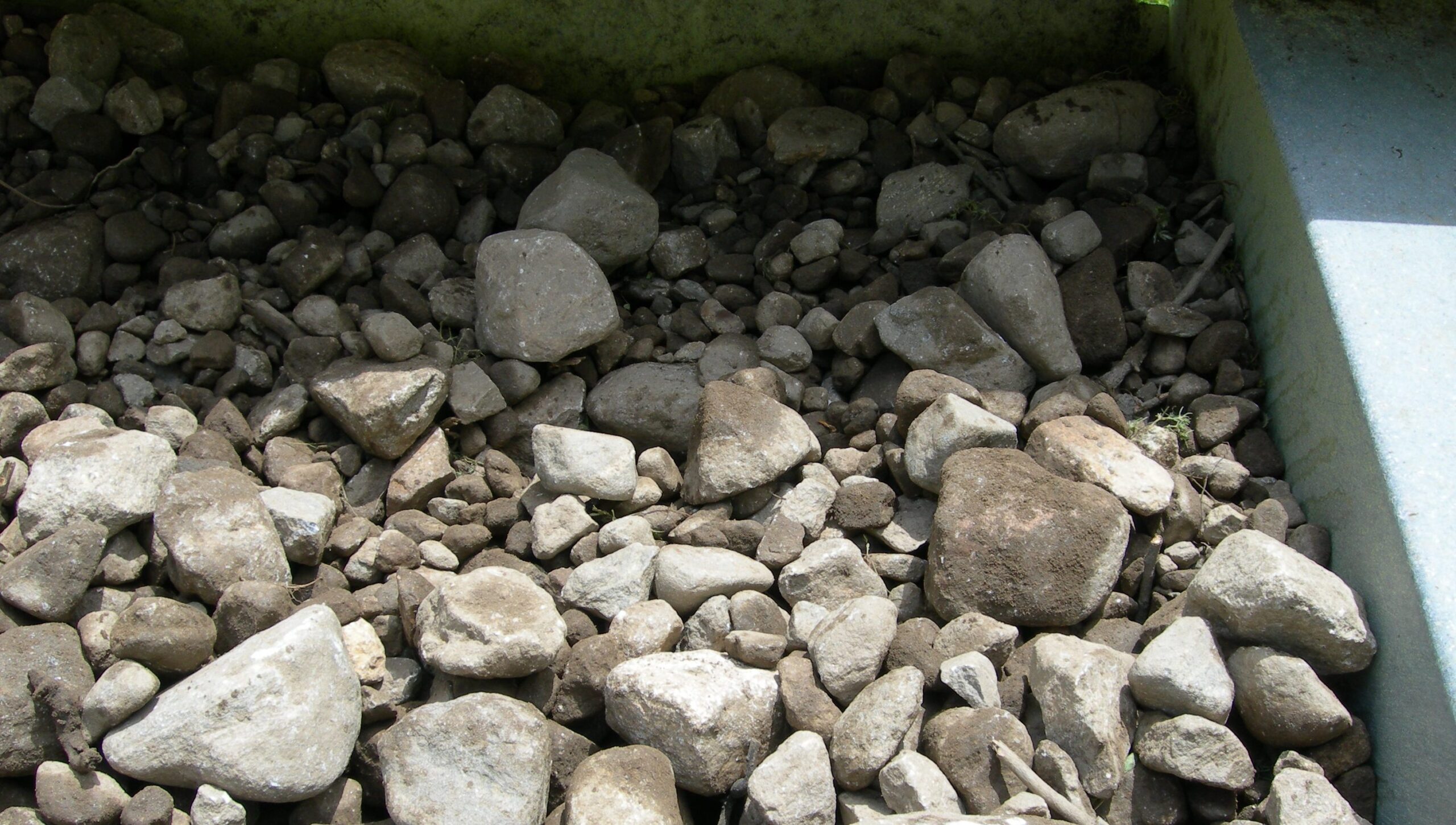
From pebbles up to roughly softball-sized stones, in the same pass. Larger boulders should be pulled by hand or with a loader before running the machine.
We never share your contact information with third parties.