
For Beach Managers:
BEACH CLEANUP EFFICIENCY TOOL
Understand your program's cleanup margin, timing pressure, and how different methods could affect cleanup speed.
What this tool helps you see:
Where cleanup time is going and why it may take longer than expected
How much cushion exists in your cleanup window with your current approach
How cleanup speed and capacity change when different methods are used–according to your beach’s specific conditions
Built from real-world cleanup programs
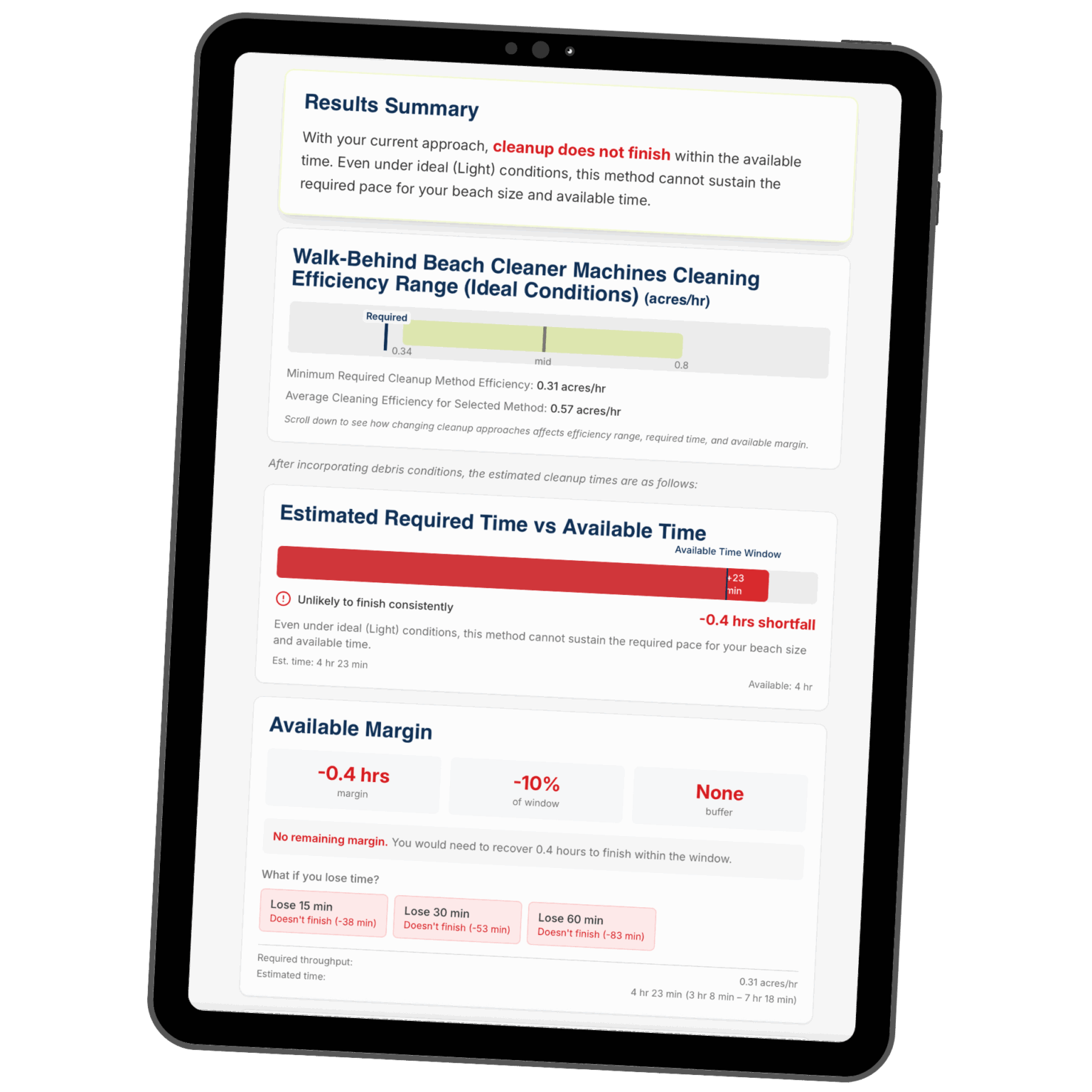
Calculator may take a moment to load.
What to Do Next
Use the results above to decide whether to optimize your current approach — or evaluate a new approach.
Compare Your Approach Efficiency to Other Cleanup Methods
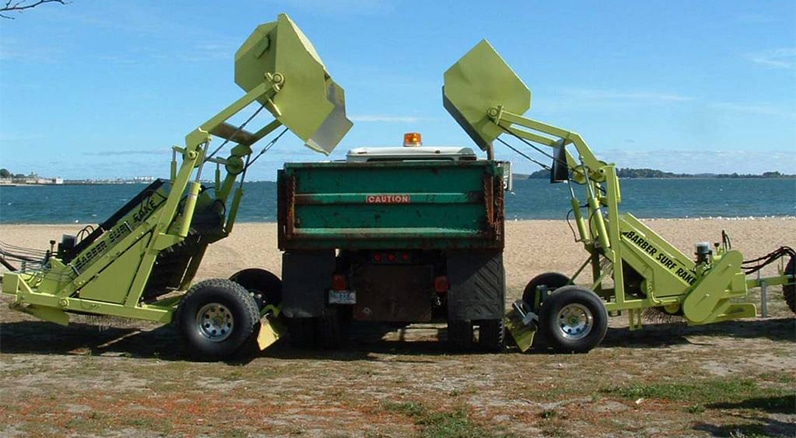
Compare how different beach cleaning methods can help (or not!) to improve your program’s cleanup efficiency and other CLEAN criteria, so you can take the best next steps for your program.
Get Your Full CLEAN Benchmark
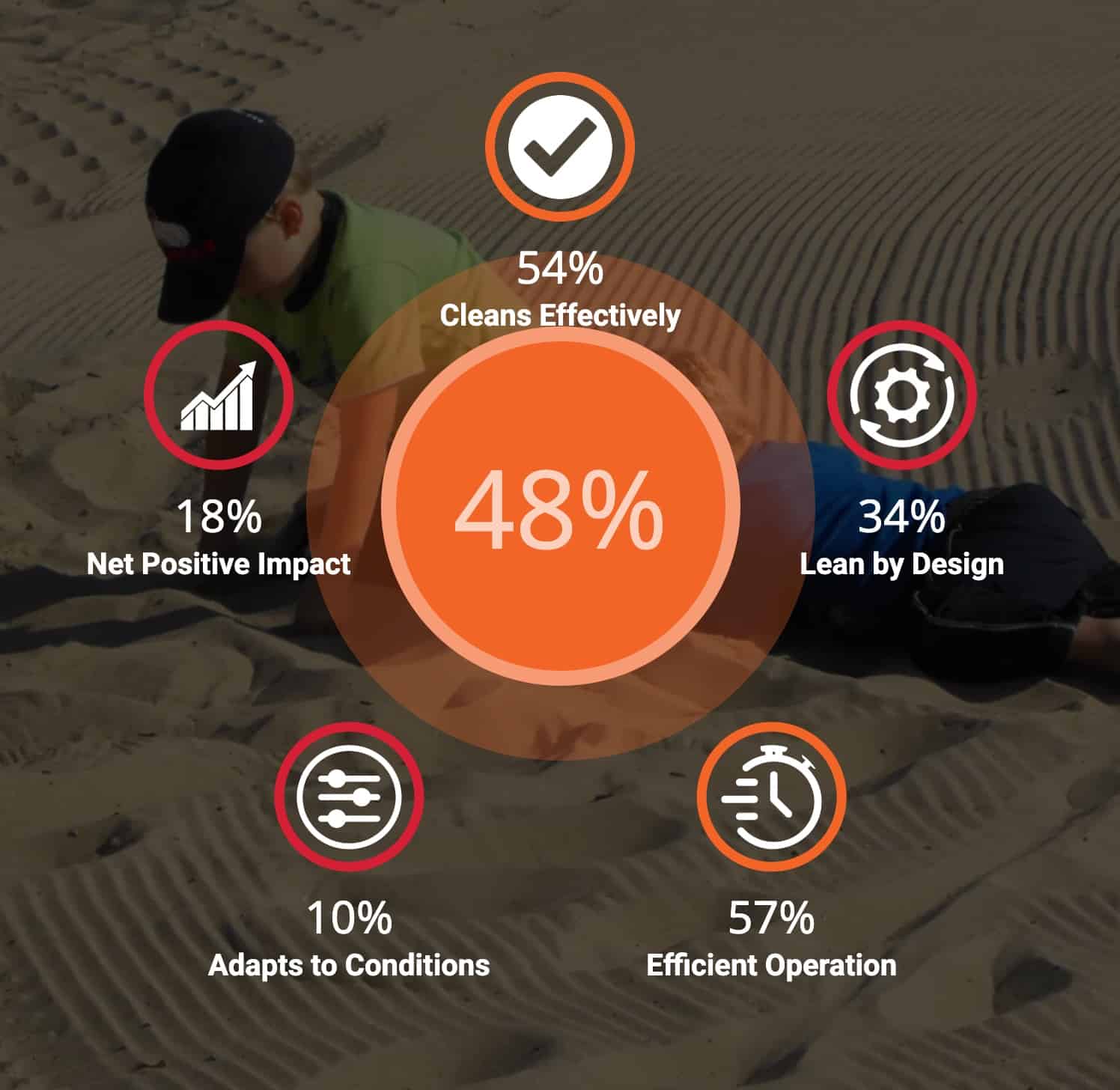
The full CLEAN Scorecard shows how your current program compares across all five CLEAN criteria — including capability, operational drag, efficiency, adaptability, and net impact — and provides practical next steps.
Talk Through Your Results

We’ll help you interpret your results based on your beach size, debris conditions, staffing realities, and the standard you’re aiming to maintain.
Frequently asked questions
This tool is designed to help you understand the true time cost of your cleanup sessions — so you can improve efficiency without guessing.
- See where cleanup time is actually going
Understand how beach size, coverage approach, debris level, and method throughput combine to determine total cleanup time. - Understand your margin (or lack of it)
See how much cushion exists in your available cleanup window—and how sensitive your plan is to delays. - Compare cleanup approaches on equal footing
Explore how manual, walk-behind, and tractor-towed methods change speed, capacity, and margin without re-entering your beach details. - Test “what-if” scenarios safely
See how heavier debris, extra passes, or reduced available time erode margin—without guessing or over-simplifying. - Shift from effort-based thinking to system-based insight
Move beyond “working harder” to understanding how structure, throughput, and coverage drive efficiency outcomes.
It doesn’t judge cleanup quality or effectiveness
The tool does not evaluate how clean the beach looks or how well debris is removed. That lives in the Cleaning Effectiveness category.It doesn’t estimate labor effort, crew size, or staffing needs
Especially for manual cleanup, the tool uses observed performance rather than projecting labor requirements.It doesn’t replace local knowledge or operational judgment
The tool explains timing and margin, but real-world decisions still depend on site-specific constraints and priorities.It doesn’t recommend a specific machine or purchase
This is an efficiency diagnostic, not a sales configurator or product selector.
This tool is designed to provide structurally accurate insights, not false precision. It uses your beach size, coverage goals, debris conditions, and available cleaning time to show how throughput and margin interact. Results are most useful for understanding relative pressure, buffer, and sensitivity to delays, rather than predicting exact minute-by-minute outcomes.
Manual cleanup is calibrated using observed performance, because manual throughput varies widely based on crew size, debris distribution, and conditions. Rather than estimating labor or fabricating averages, the tool uses your real-world experience as the baseline and shows how changing conditions affect available margin.
No. Cleanup coverage is selected explicitly. Many programs focus on targeted or partial coverage, and the tool reflects that. All calculations are based on the effective area you intend to clean, not an assumed 100% of the beach, unless you select that option.
Because staffing and equipment planning are not efficiency questions alone. This tool focuses on time, throughput, and margin. Crew size, labor effort, cost, and operational complexity are evaluated in other parts of the CLEAN Standard to avoid mixing different decision layers into a single result.
No. The tool doesn’t declare a “best” method. It shows how different approaches change speed, capacity, and marginunder the same conditions. What’s appropriate depends on your priorities, constraints, and how efficiency fits alongside effectiveness, adaptability, and overall impact.