
For Beach Managers:
BEACH CLEANUP ATTENTION BUDGETING CALCULATOR
See where your cleanup program consumes time and attention — and what reclaimed capacity could unlock.
Enter how many hours you spend each week on each category below, then tap “Update Results” to see your attention budget.
This tool estimates time and attention. It does not score your performance.
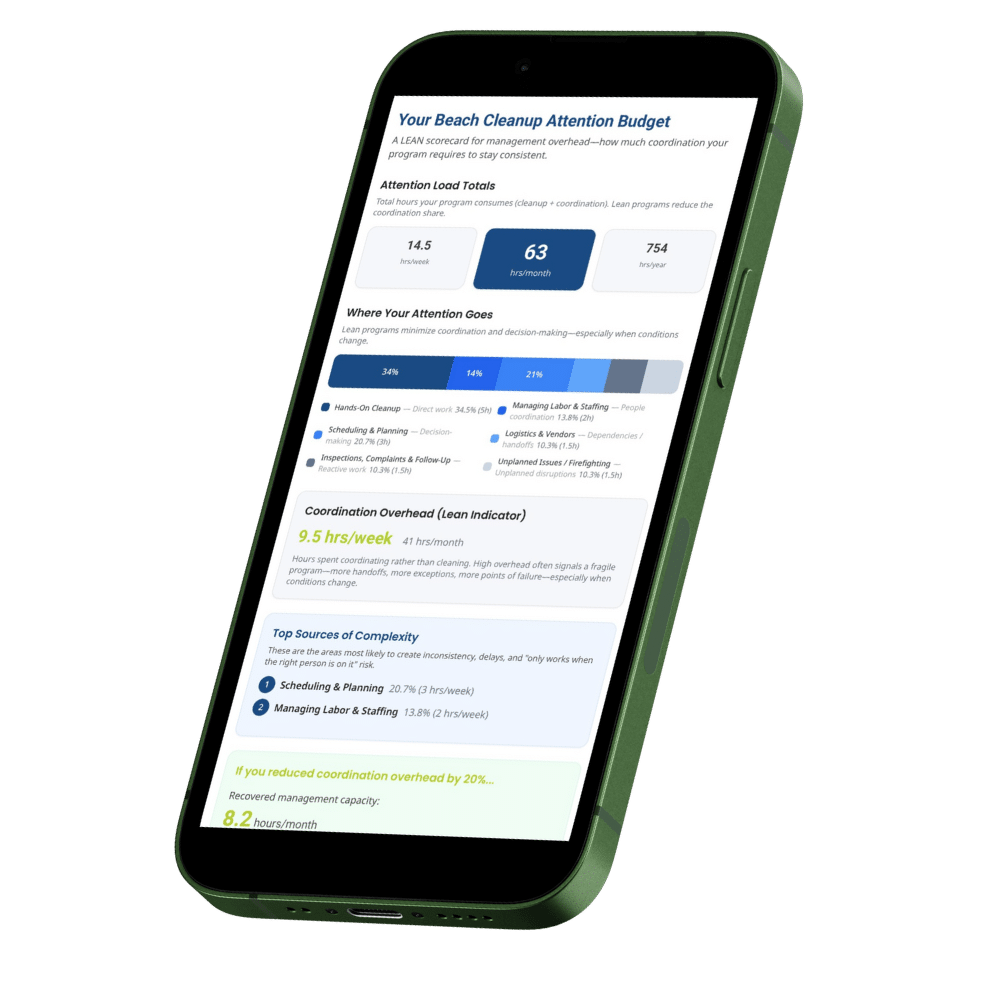
Calculator may take a moment to load.
What to Do Next
Use the results above to decide whether to optimize your current approach — or evaluate a new approach.

Compare how different beach cleaning methods can help (or not!) to improve your program’s operational drag and other CLEAN criteria, so you can take the best next steps for your program.
Get Your Full CLEAN Benchmark
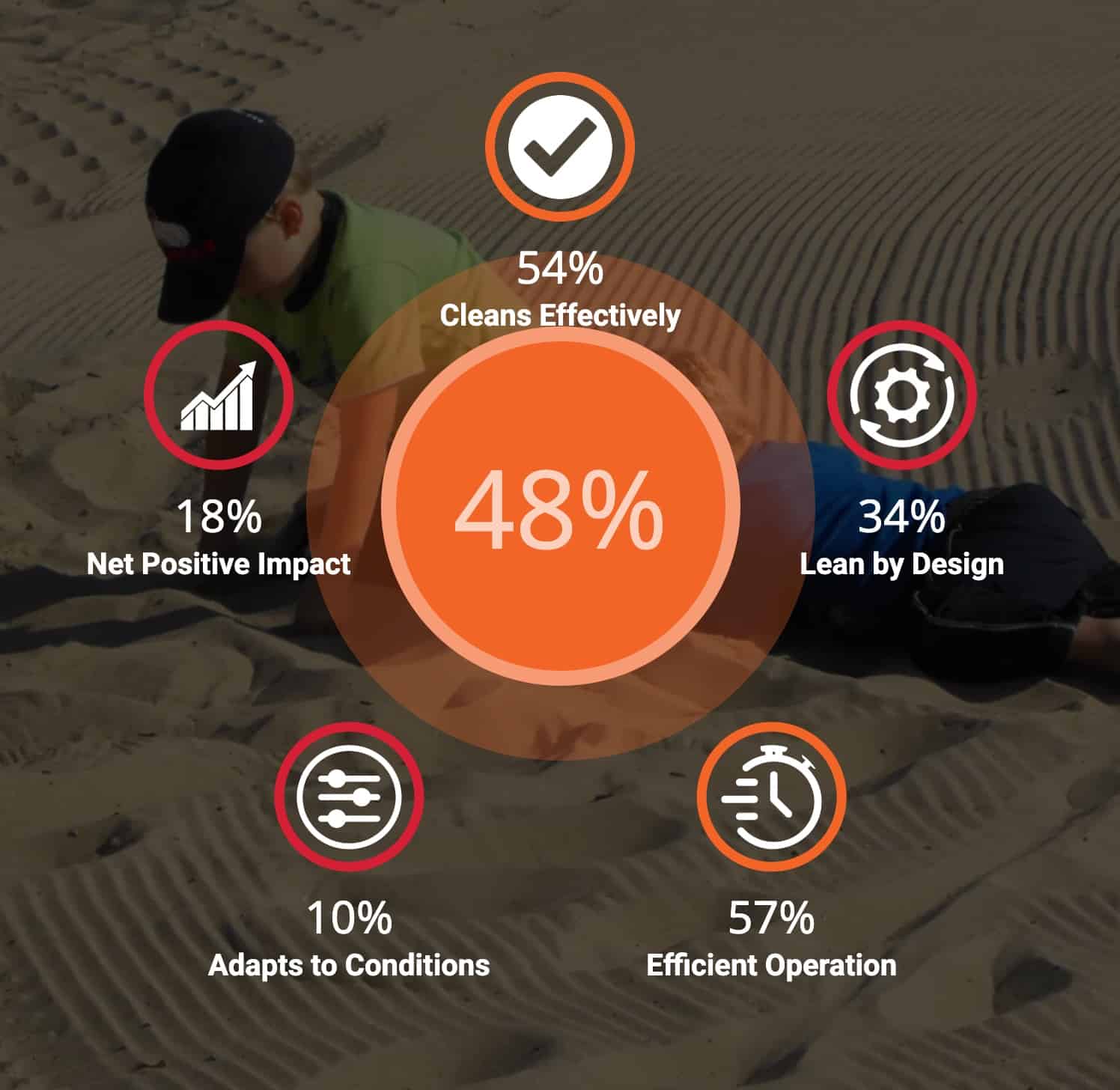
The full CLEAN Scorecard shows how your current program compares across all five CLEAN criteria — including capability, operational drag, efficiency, adaptability, and net impact — and provides practical next steps.
Talk Through Your Results

We’ll help you interpret your results based on your beach size, debris conditions, staffing realities, and the standard you’re aiming to maintain.
Frequently asked questions
Your attention budget is the finite time and focus required to keep cleanup results consistent.
Lean programs minimize coordination and exceptions so results don’t depend on constant oversight.
It estimates how much management time and attention your cleanup program requires each week — including coordination, planning, and problem-solving, not just hands-on cleanup.
They don’t need to be exact. Informed estimates are enough to reveal where attention is being consumed and where operational drag may exist.
Time spent making cleanup happen rather than cleaning itself — scheduling, staffing, logistics, follow-ups, and unplanned issues.
High overhead often signals a fragile or management-heavy program.
It translates coordination time into management attention cost — the opportunity cost of time spent coordinating instead of improving reliability or infrastructure.
This does not include labor, equipment, or hauling.
Use them to identify:
Where exceptions and firefighting occur most
Where results depend on specific individuals
Where simplifying workflows could improve consistency
This tool highlights where lean improvements matter most — not what to buy or change.